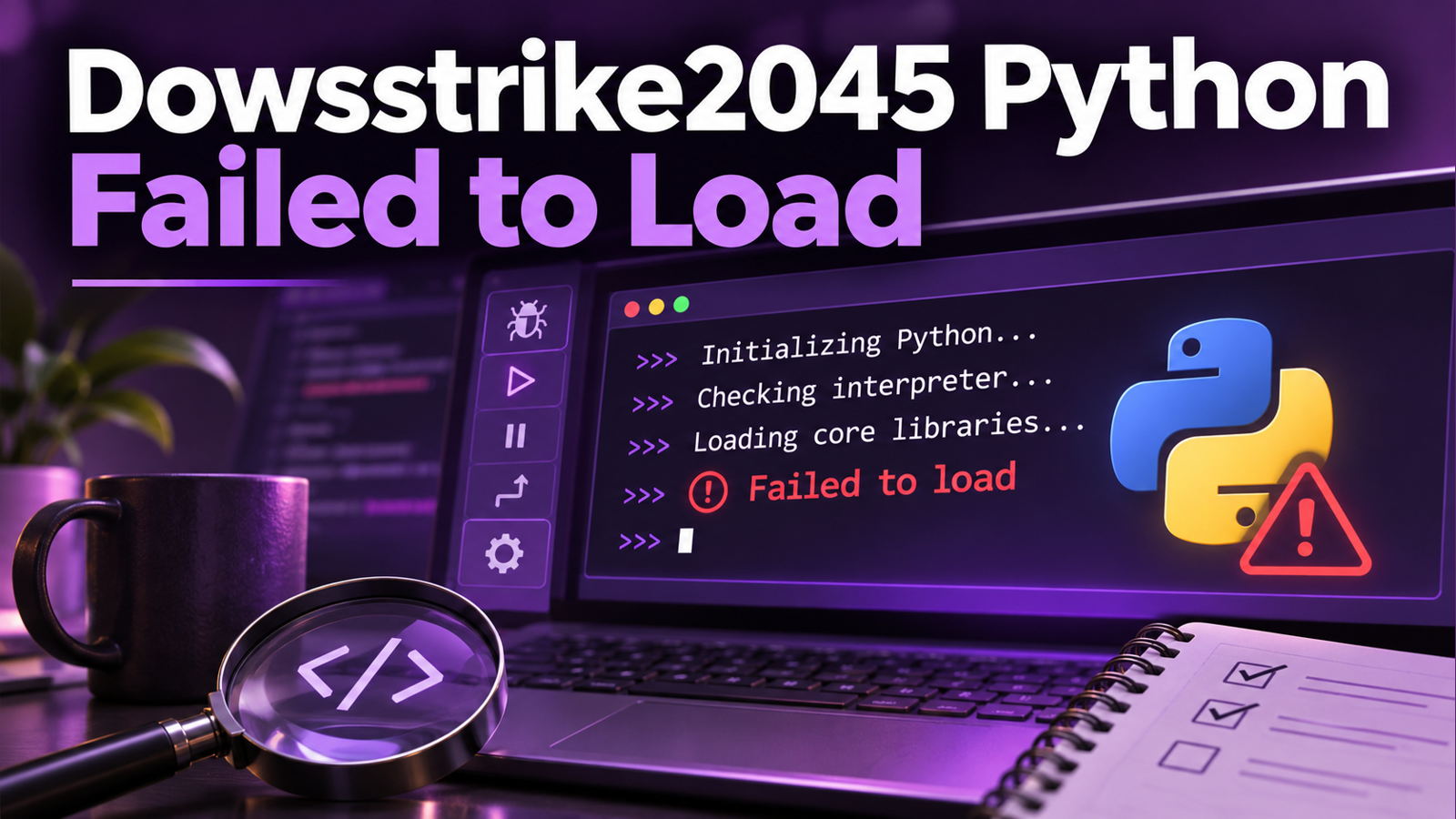
Dowsstrike2045 Python Failed to Load should be investigated through the actual application log, not a guessed installer. No authoritative public release or support specification for Dowsstrike2045 was verified in the research for this guide.
That leaves two separate tasks: establish what software you have, then diagnose any genuine Python failure. Combining them leads to unsupported advice, such as recommending an exact runtime version or an unknown package without knowing the program’s requirements. A careful investigation can be practical without pretending that those details are established.
Verify the label before trusting a repair
Software identity includes more than a name. A dependable trail usually connects the publisher, project documentation, release information and the download being offered. Those records should refer to the same product. A tutorial using the same keyword is not enough if it cannot connect its instructions to an accountable source.
An internal tool might legitimately lack a public website. In that case, the organization providing it should supply its own documentation and installation route. Public search cannot establish that a private file is authentic. Ask the actual supplier to confirm its identity instead of choosing a similarly named file from elsewhere.
Be equally cautious about claims that the software is definitely malicious. An evidence gap does not prove that conclusion either. The responsible position is narrower: its official identity and repair requirements remain unverified, so product-specific instructions should not be presented as established facts.
Find the full error behind Dowsstrike2045 Python Failed to Load
A desktop dialog often summarizes a longer failure. Look for a documented application log or terminal output associated with the same launch. Preserve the timestamp and complete sequence so that a later message is not accidentally confused with the original cause.
The exception type helps organize the investigation. Missing imports, inaccessible files and malformed configuration are different categories. The Python tutorial on exceptions explains how error text and traceback context fit together. Read both rather than searching only for a generic loading sentence.
When sharing the record, remove credentials and personal information. A traceback can expose local account names and private directory structures; configuration output can expose much more. Redaction should preserve the technical structure of the failure while protecting confidential values. Keep the unedited original in a private location for reference.
Check the launch method and working directory
An application started by a shortcut may use a different folder from one started inside a terminal. If the program refers to a relative settings path, this can change which location it searches. A missing file message should therefore be compared with the actual requested path, not simply with a file of the same name somewhere on disk.
Record the shortcut target and its starting folder before editing either. If the project has authenticated setup instructions, compare their expected layout with your installation. An incomplete extraction or moved resources folder may explain a failure without requiring a new Python installation.
For developers maintaining a trusted project, Python’s pathlib reference describes filesystem path handling. It can help explain why paths differ between operating systems and launch locations. It does not establish a special Dowsstrike2045 folder structure, and none should be invented from the name.
Make sure the correct environment is selected
Python environments hold their own interpreter context and installed packages. An editor may remember one environment while a terminal uses another. This is a common explanation when a program runs in one place but reports missing imports elsewhere, although the actual error still needs to be checked.
Compare interpreter paths instead of comparing only visible version labels. Two installations can share a version number yet have different package sets. A small diagnostic command using sys.executable can show the path used by a terminal, while the editor’s settings reveal its selected runtime.
The official virtual environment tutorial explains how separate projects can maintain different dependencies. Isolation is useful for compatibility, but it is not a sandbox for untrusted programs. Code running in that environment still has the access permitted to the account executing it.
Rebuild only when the project is trustworthy
If a verified project provides a dependency manifest, a separate environment can help test whether the existing installation has drifted. Preserve the old environment first and use the documented interpreter version. Do not construct a replacement requirements list from unrelated websites that happen to mention the same keyword.
Keep package names exact. Distribution names and import names can differ, so guessing an installation command from an import line may select the wrong thing. Resolve that difference through the genuine project’s documentation or package metadata before installing anything.
Similarly, do not upgrade every library in the hope that newer always means more compatible. A dependency can change its interface or supported Python versions. Rebuilding a known set separately gives a cleaner comparison than modifying the only working installation and losing the previous state. Record the result before deciding whether to switch the launcher.
Use a small decision sequence
First, establish whether Python starts at all. If it does, identify the first failing operation in the traceback. Next, compare that operation with the project’s documented files, configuration and dependencies. Then make one justified change and run the same launch test again.
If the failure changes, record the new output. A missing module followed by a configuration exception may indicate progress through startup, but it does not establish a completed repair. Continue checking the intended workflow until the actual user task succeeds rather than stopping at the first open window.
For additional context, our Python startup troubleshooting overview covers environment mistakes. Our article on verifying software updates explains why a claimed release needs supporting evidence. Use both as background reading, not as an official maintenance contract for an unidentified product.
Know when to stop experimenting
Stop if a proposed repair requires running an executable whose publisher cannot be verified, entering credentials into an unrelated page or disabling protection without a specific explanation. Those actions add new uncertainty and can affect much more than the original application.
A legitimate support team should be able to explain the supported runtime, expected installation source and reason for any unusual permission requirement. If that information is unavailable, preserving the failure record is more useful than repeatedly trying random patches. You retain a clear baseline for a later, better-informed investigation.
For a work-critical process, use a known working alternative or backup workflow while the issue is assessed. Do not put the only copy of important data into an unverified tool to test whether it loads. Separate diagnosis from production use so that a startup problem does not become a data-loss problem.
Compare a known working launch
If the same trusted project still runs on another authorized machine, compare documented environment details rather than copying its entire installation blindly. Note the interpreter, dependency versions, launch folder and configuration structure. Keep credentials and machine-specific paths separate from reusable settings. A difference can suggest a targeted test, but it is not proof of the cause until the result is reproduced. Do not overwrite the working copy while investigating the failing one.
Frequently asked questions
Is Dowsstrike2045 officially documented here?
No verified public publisher or release manual was established in the research reviewed. The article provides general Python diagnosis, not official instructions for that name.
Can the same loading message have several causes?
Yes. A launcher can summarize different underlying failures with one sentence. The full exception and launch context are needed to distinguish them.
Does a virtual environment protect my files?
It separates dependencies, but it does not prevent a program from using your account’s file or network access. It should not be treated as a security sandbox.
Should I change permissions immediately?
Only after identifying the denied resource and the legitimate access requirement. Broad administrator access is not an evidence-based first response to an unidentified loading error.
What should be saved before troubleshooting?
Keep the full error, launch command, configuration backup and existing environment details. A controlled record makes each later change easier to evaluate and reverse.
About the Author


1 thought on “Dowsstrike2045 Python Failed to Load: An Evidence-Based Guide”