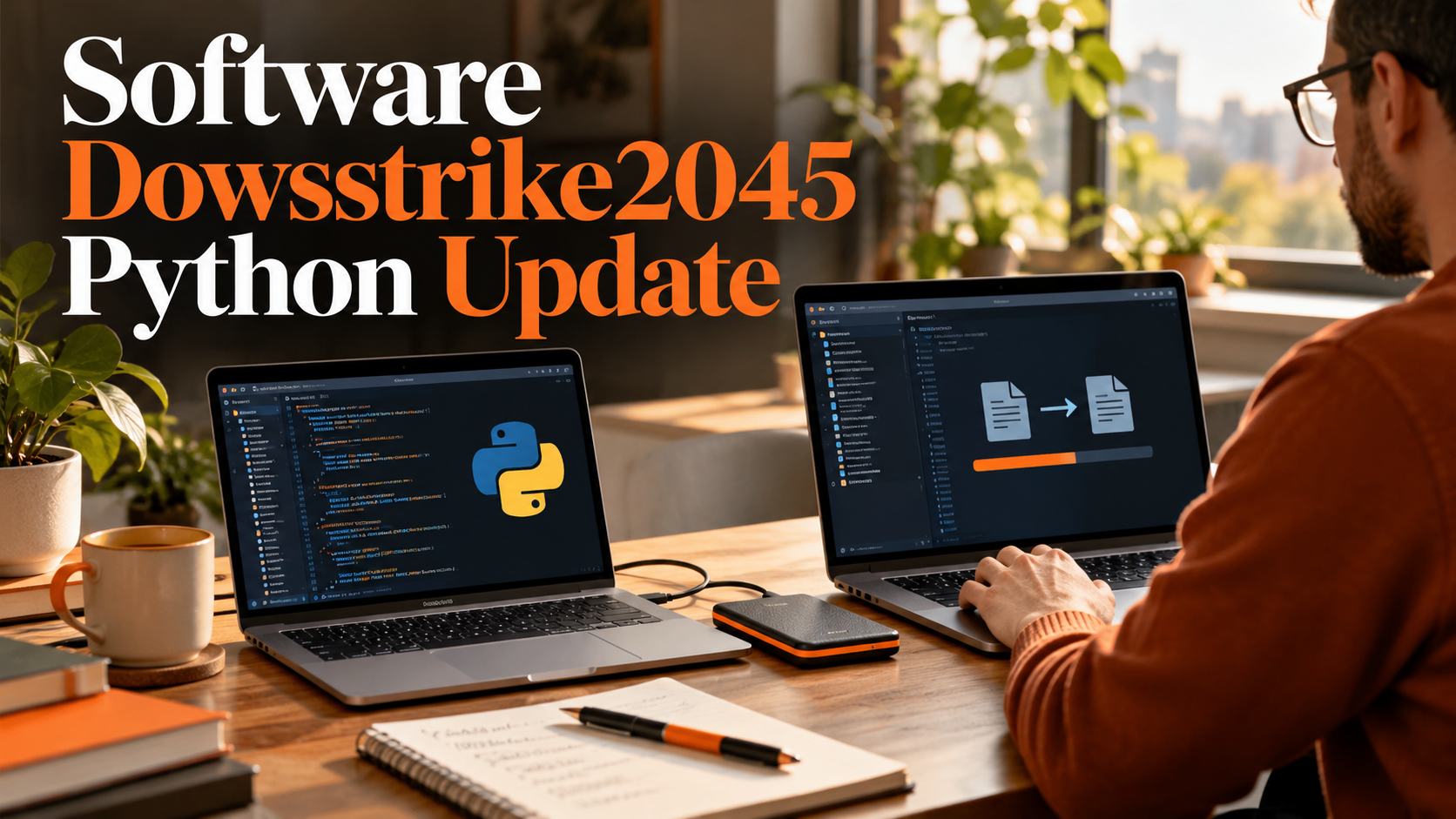
No authoritative official release was established for a software Dowsstrike2045 Python update in the public material checked. A specific latest version, feature upgrade, download, or patch command therefore cannot be recommended as verified product information.
If you encountered this name while maintaining a real project, focus first on identifying that project and its approved release channel. Updating an application should be a controlled change with a baseline, useful tests, and a recovery route. This guide explains how to organise those steps for Python software while keeping the unverified product claim separate from established update practices.
Software Dowsstrike2045 Python Update: Verify the Release Source
Find the original update notice rather than relying on summaries copied between websites. Check whether it is connected to the maintainer of the application you actually have. A familiar-looking name can appear on an unrelated page or package, so identity must be established through maintained project links and release references.
The evidence limit should remain explicit. A private tool could use the label even if no public release was confirmed. In that case, its owner should provide the approved artifact and instructions. What cannot be justified is inventing a public changelog, security patch, or compatibility table to fill the gap. A useful update decision depends on information tied to the real project.
Decide Which Component Needs to Change
An application, its libraries, and the Python interpreter are separate components. An update to one may require a coordinated change to another, but they should not be confused. Replacing the interpreter does not automatically update application code, and upgrading a dependency does not confirm that the application supports it.
Write down the intended scope in a single sentence. For example, a verified project’s release may require a particular dependency change. That is an illustration, not a Dowsstrike2045 release claim. Keep unrelated packages and working applications out of the change unless their documented requirements make involvement necessary. A limited scope makes troubleshooting and restoration more manageable.
Record the Existing Environment
Capture the actual project release, interpreter path and version, installed dependency state, configuration location, and launch method. Check from the context that runs the application, especially if it is a service or scheduled task. A developer terminal can use a different environment from the everyday workflow.
Keep a representative input and its expected result where permitted. Also identify data the application modifies and services it contacts. This record is the baseline against which the candidate will be judged. Without it, a changed result may be mistaken for an improvement or an old problem may be blamed on the new version. Store diagnostic notes privately and exclude secrets from material prepared for support.
Read Compatibility Before Choosing the Candidate
Use the genuine project’s release notes and declared requirements. The PyPA guide to project metadata describes how Python compatibility and dependencies can be specified. Read actual values from the project instead of assigning requirements from the software label.
Look for migration steps and changes that affect normal use. An update may alter configuration, output formats, or supported integrations, but those possibilities must be checked in the real documentation. If the candidate requires a newer interpreter, consider every important dependency before proceeding. The newest release is not automatically the best supported configuration for an older workflow.
Protect Data Before Experimenting
Save the working code and configuration, but also back up data that could be overwritten or migrated. Keep recovery copies separate from the test output location. Protect backups containing personal or business information and do not include credentials in shared support archives.
Think through restoration in practical terms. Which environment will run the old code? Where will the original data come from? Can a new file format be read by the previous version? These questions should be answered before a candidate touches the only valuable copy. A recovery plan that covers packages but ignores changed records may fail when it is needed most.
Test in a Separate Environment With Separate Inputs
Create a dedicated environment for the verified candidate using a supported Python interpreter. The official virtual environment tutorial explains how separate projects can maintain different package versions. Follow the real maintainer’s installation instructions inside that environment.
Keep external effects separate too. An environment folder does not prevent the program from reading normal files or reaching a live service. Use representative data copies and a test configuration where supported. Confirm input and output paths before execution. This makes the comparison controlled and reduces the chance that an evaluation unexpectedly becomes a production change.
Check More Than Whether Startup Succeeds
Start with a documented example, then exercise the operations that matter in your workflow. Inspect result completeness, format, and expected handling of invalid input. A process that opens successfully may still fail during an export, skip records, or generate output that another application cannot read.
Dependency checks can contribute evidence. The pip check reference describes checking installed distributions for compatible declared dependencies. Run the command through the candidate’s interpreter. Treat a successful report as a narrow check, not a certificate of application correctness. Keep expected results and actual results together so unexplained differences can be investigated before the candidate replaces a dependable setup.
Document the Tested State and Switch Deliberately
Save the exact artifact, interpreter, dependencies, configuration changes, and test outcomes for the candidate you intend to use. The pip guide to repeatable installations explains ways to reduce differences between installations. Apply the approach supported by the real project and account separately for services outside Python.
For related examples of checking unfamiliar technology claims, read our Genboostermark code guide and Gfxrobotection software evidence guide. These are separate subjects, not evidence that the products are connected. Their relevance is the same verification principle: identify the real source before relying on a feature list or installation claim.
Example: Decide Whether to Postpone a Candidate
Imagine that a verified update passes a basic sample but fails an important integration test. The release may contain useful changes, yet it is not ready for that workflow until the failure is understood. Keep the known working process available and preserve the test evidence.
Compare the integration requirements with the actual release notes and configuration. If the candidate intentionally changes a contract, plan the necessary downstream adjustment. If the behaviour is unexplained, provide a sanitised reproducer to the maintainer. Do not combine unrelated dependency changes simply to force the test to pass without understanding the cause.
This scenario does not describe a confirmed Dowsstrike2045 release. It demonstrates a practical acceptance decision for any identified Python application. Postponing an unsuitable candidate can be a sound outcome when compatibility evidence is incomplete. Record what failed, what remains on the working version, and which check must pass before another deployment attempt. That keeps the next evaluation focused rather than repeating the same uncertainty.
Frequently Asked Questions
Where is the official Dowsstrike2045 update download?
An authoritative official download was not established in the checked evidence. If the label refers to a real internal project, obtain the approved artifact through its owner. A similarly named download is not automatically related.
Should I update just because an article says it is urgent?
Verify the claim through the actual project’s release or security channel. Establish which versions are affected and what action the maintainer recommends. Urgent wording alone does not prove that a file is an authentic patch for your application.
Can I keep the old and new versions for comparison?
Often a separate environment and separate data copies make comparison practical. The exact method depends on the real project’s installation and state management. Avoid having both versions write to the same important files during evaluation.
What if the candidate changes my output format?
Determine whether the change is documented and whether downstream tools support it. Compare representative output before switching. A successful run is not enough if another part of the workflow can no longer consume the result.
Does rollback require more than reinstalling old packages?
It can. Application data, configuration, external services, and migrations may need restoration too. Preserve the full working context and verify the recovery steps for important workflows before relying on rollback.
About the Author



1 thought on “Software Dowsstrike2045 Python Update”